
All Updates | CAD Development | Prototype Assembly | Testing | Company News
Development Log
Follow the development journey of Arcentis Technologies as concepts evolve into working
prototypes through engineering, testing, and continuous improvement.
Journal Entry #001
Arcentis Technologies was founded with a simple objective: to transform innovative ideas into practical products through engineering, prototyping, testing, and continuous improvement. This journal documents that journey from concept to reality.
Innovation often begins with a concept, but bringing an idea to life requires a structured development process. Arcentis Technologies was founded to document and support that journey from initial concept through design refinement, validation, and future product development.
The company's first active project is the ARC™ Personal Climate Device, an innovative concept focused on delivering targeted personal airflow through a compact and distinctive architecture.
The Development Journal has been created to provide transparency throughout the development process. Each entry documents key milestones, design decisions, challenges, and progress as ARC™ moves from concept to physical prototype and beyond.
As development continues, future entries will explore CAD design evolution, prototype assembly, airflow testing, performance validation, and future product refinement.
This journal marks the beginning of that journey.
🟢 STATUS: CONCEPT APPROVED
REVISION: REV C
DATE: JUNE 2026
Published: 18 June 2026
Journal Entry #002
Every innovative product begins with a problem worth solving.
The ARC™ Personal Climate Device originated from the desire to explore a more focused approach to personal comfort. Rather than relying on larger systems that affect an entire room or workspace, the concept was developed around delivering airflow directly where it is needed most.
Early development focused on identifying key design objectives:
- Targeted airflow delivery
- Compact overall architecture
- User comfort and ergonomics
- Practical everyday usability
- Future scalability for manufacturing
Multiple concept sketches were explored during this phase. Different airflow pathways, structural geometries, and mounting approaches were evaluated to determine the most effective direction for further development.
One of the defining characteristics of ARC™ emerged during this stage: the distinctive curved architecture that would eventually become the foundation of the product's visual identity.
The concept phase established the framework for future CAD development and engineering refinement.
With the primary design objectives defined, development progressed into detailed digital modelling.
The next phase of development focused on transforming concept sketches into detailed CAD models capable of supporting engineering evaluation and future prototype development.
🟢 STATUS: PROJECT INITIATED
REVISION: REV C
DATE: JUNE 2026
Published: 18 June 2026
Journal Entry #003
Following completion of the concept development phase, work began on transforming initial sketches into a detailed digital model.
Computer-Aided Design (CAD) enabled the ARC™ concept to be explored with greater precision and provided a platform for evaluating structural geometry, component integration, and overall product architecture.
Throughout development, multiple design iterations were created and assessed. Each revision focused on improving key areas, including:
- Structural integrity
- Ergonomic proportions
- Airflow pathway optimisation
- Component integration
- Overall visual refinement
As the model evolved, the distinctive curved profile became increasingly refined and began to establish the recognisable ARC™ silhouette.
CAD development also provided the opportunity to evaluate practical considerations that are difficult to assess through sketches alone, including internal clearances, assembly requirements, and future prototype preparation.
The design process remains iterative by nature, with each revision providing valuable insight into how the product can be further improved.
The work completed during this phase laid the foundation for the REV C engineering design milestone and preparation for physical prototype development.
Multiple design iterations were evaluated throughout development, with each revision contributing to improvements in geometry, component integration, ergonomics, and overall product architecture.
🟢 STATUS: CAD Development Complete
PROTOTYPE: ARC-P001
REVISION: REV C
ENGINEERING LOG: ENG-003
DATE: June 2026
Published: 18 June 2026
Entry #004
The ARC™ Personal Climate Device has reached an important development milestone with the completion of the REV C engineering design.
This revision represents the most refined version of the ARC™ concept to date and reflects the cumulative lessons learned throughout the concept development and CAD evolution phases.
The primary objective of REV C was to improve the overall architecture while preparing the design for future prototype assembly and testing. Development efforts focused on refining structural geometry, simplifying key features, and enhancing the overall design language of the product.
Several areas received particular attention during this phase, including:
- Airflow pathway refinement
- Structural geometry improvements
- Enhanced component integration
- Improved manufacturability considerations
- Overall design simplification and visual refinement
Throughout development, multiple design iterations were evaluated and compared. Each revision provided valuable insight into how the ARC™ architecture could be improved to better support future testing and performance validation activities.
One of the most significant outcomes of the REV C phase was the establishment of a more cohesive and recognizable product form. The distinctive curved profile that emerged during concept development was further refined and now serves as a defining characteristic of the ARC™ design identity.
The completion of REV C also provided an opportunity to review practical considerations associated with future prototype development. Internal clearances, component positioning, assembly requirements, and structural features were assessed to ensure the design was progressing toward a viable physical prototype.
While REV C represents a major milestone, development remains an iterative process. The purpose of each revision is not only to improve the current design but also to generate the information necessary to guide future improvements.
With the REV C engineering design now complete, the project is transitioning into the next stage of development.
Upcoming activities will focus on prototype assembly preparation, component integration, airflow validation planning, and performance evaluation.
The completion of REV C marks the end of the initial digital development phase and the beginning of the transition from virtual design to physical prototype testing.
🟢 STATUS: Engineering Design Completed
PROTOTYPE: ARC-P001
REVISION: REV C
ENGINEERING LOG: ENG-004
DATE: June 2026
Published: 18 June 2026
Entry #005
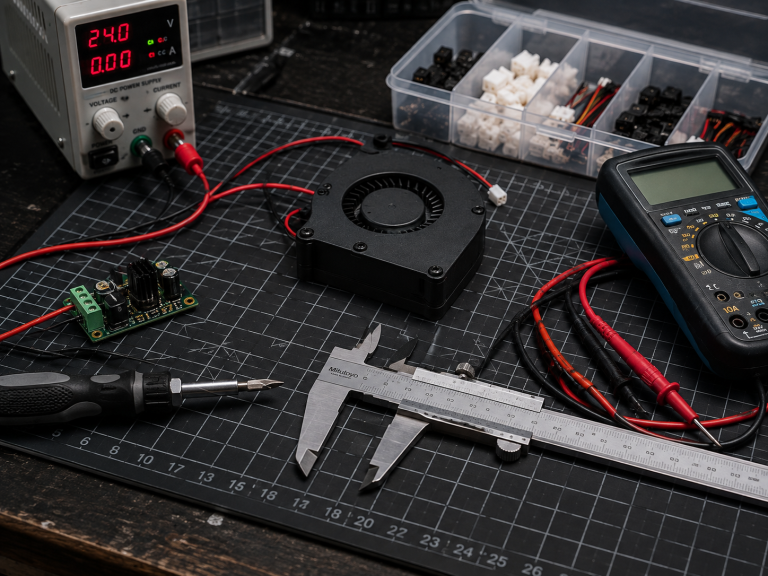
Development of the ARC™ Personal Climate Device has now entered the prototype preparation phase.
With the REV C engineering design completed, attention has shifted to assembling the first physical prototype and preparing for initial airflow validation.
This stage represents the transition from digital design to physical product evaluation. While CAD development provided valuable insight into geometry, integration, and structural design, physical prototyping is essential for understanding real-world performance.
Several key development components have now been received, including the blower system that will form the core of the ARC™ airflow architecture. Additional prototype materials, connectors, power components, and assembly tools have also been gathered in preparation for testing.
Current objectives include:
- Preparing the prototype housing for assembly
- Integrating the blower system within the ARC™ architecture
- Evaluating component fit and alignment
- Establishing electrical connections and power requirements
- Preparing for initial airflow testing
- Documenting assembly procedures and observations
The prototype phase will provide the first opportunity to evaluate how the design performs outside of the digital environment. Particular focus will be placed on airflow direction, structural stability, component integration, and overall usability.
While adjustments and refinements are expected during development, prototype assembly marks a significant milestone in the evolution of ARC™ from concept to functional hardware.
The knowledge gained during this phase will inform future revisions and support continued development toward a fully validated personal climate device.
Development will now continue with prototype assembly, blower integration, and the first round of airflow validation testing.
🟢 STATUS: Prototype Preparation in Progress
PROTOTYPE: ARC-P001
REVISION: REV C
ENGINEERING LOG: ENG-005
DATE: June 2026
Published: 18 June 2026
Entry #006
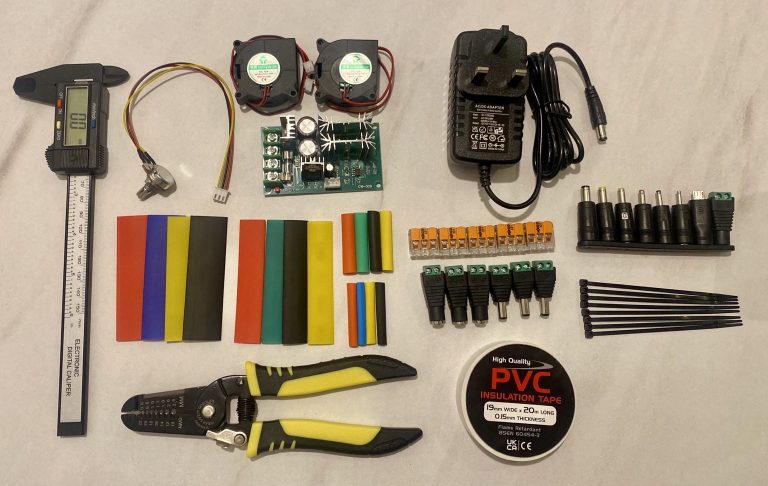
The ARC™ Personal Climate Device has reached a major development milestone with the successful arrival of the primary components required for prototype assembly and evaluation.
With the completion of the REV C engineering design, development has now progressed from digital modelling and design refinement into the physical preparation stage. Key prototype materials, airflow components, electrical hardware, and assembly tools have been gathered to support the construction of the first functional ARC™ prototype.
The arrival of these components marks the beginning of the project's transition from virtual development to practical hardware validation.
Components received for prototype development include:
- Airflow blower system
- Power and electrical components
- Connectors and assembly hardware
- Prototype fabrication materials
- Measurement and testing equipment
- Assembly and development tools
Throughout the development process, each design decision has been guided by the objective of delivering targeted personal airflow through a compact and ergonomic architecture. Physical prototyping will now provide the opportunity to evaluate how these design principles perform outside of the CAD environment.
The upcoming phase of development will focus on component integration, assembly planning, electrical configuration, and preparation for initial airflow testing.
Receiving the required prototype components represents a significant step forward for the ARC™ programme and establishes the foundation for the first round of physical validation activities.
Development will now continue toward prototype assembly and initial performance evaluation.
🟢 STATUS: Components Received & Verified
REVISION: REV C
Prototype: ARC-P001
Engineering Log: ENG-006
Prototype Date: June 2026
Published: 19 June 2026
Entry #007
🟢 STATUS: Prototype Assembly Initiated
REVISION: REV C
Prototype: ARC-P001
Engineering Log: ENG-007
Prototype Date: June 2026
Published: 26 June 2026
The ARC™ Personal Climate Device has entered the first physical assembly phase following the completion of component procurement and preparation activities.
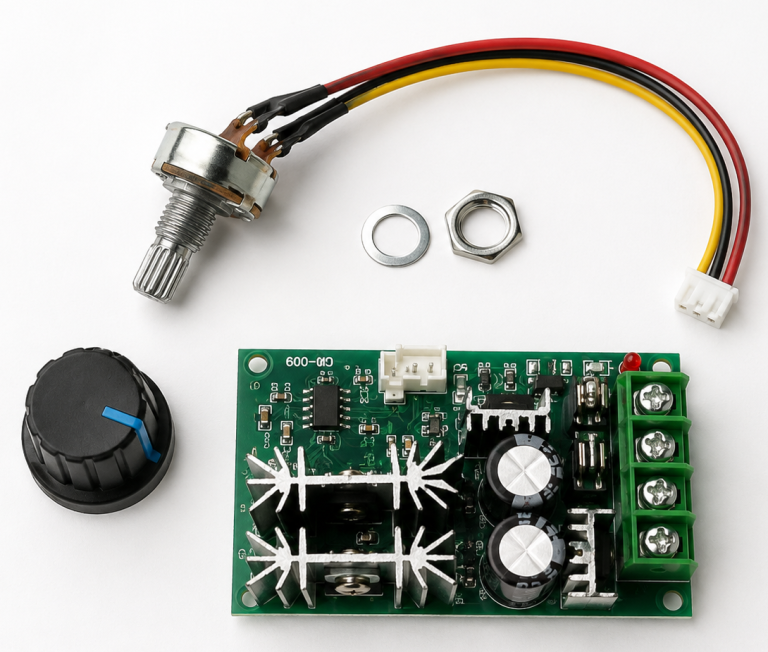
With all primary prototype hardware now available, development has progressed from component evaluation into the integration stage. Initial assembly activities will focus on combining the airflow system, power delivery components, control electronics, and prototype structure to create the first functional ARC™ prototype.
This phase will allow the first validation of design assumptions established during the CAD development process and provide valuable data for future refinements.
Assembly Activities
- Component fit verification
- Airflow system positioning
- Electrical system layout planning
- Speed controller integration
- Wiring route evaluation
- Prototype safety review
Next Steps
- Complete prototype assembly
- Verify electrical operation
- Conduct initial airflow testing
- Evaluate performance and identify improvements
The commencement of physical assembly represents another major milestone in the development of the ARC™ Personal Climate Device.
Entry #008
🟢 STATUS: Prototype Build & Electrical Testing
REVISION: REV C
Prototype: ARC-P001
Engineering Log: ENG-008
Prototype Date: June 2026
Published: 7 August 2026
The ARC™ Personal Climate Device has successfully progressed into its first electrical validation stage following the completion of the initial prototype assembly.
Power delivery components, control electronics, and primary wiring have now been integrated into the prototype platform, allowing individual systems to undergo controlled functional verification prior to full device testing.
The purpose of this stage is to confirm that each electrical subsystem operates safely and reliably before airflow performance testing begins. Early validation reduces development risk and provides valuable feedback for future design refinements.
As with every stage of the development programme, testing is being carried out in a structured manner with careful documentation of observations, measurements, and any required improvements.
Electrical Validation Activities
• Initial power-on verification
• Voltage stability checks
• Speed controller operation
• Wiring inspection
• Connector verification
• Electrical safety assessment
Current Findings
Initial testing confirms that the prototype electrical architecture is functioning as intended.
Individual components are being evaluated to verify stable operation before progressing to integrated airflow testing.
Any observations identified during this stage will be incorporated into future design revisions as part of Arcentis Technologies' continuous improvement process.
Next Steps
• Integrate the airflow system
• Verify fan performance
• Measure airflow characteristics
• Evaluate thermal behaviour
• Record baseline performance data
The first successful electrical validation represents an important transition from mechanical assembly to functional engineering evaluation.
Although this stage does not constitute a completed product, it establishes the foundation for future performance testing and design optimisation.